
Revision Foot & Ankle Surgery in Toledo
SECOND OPINIONS • REVISION SURGERY • COMPLEX RECONSTRUCTION
Previous foot or ankle surgery doesn’t always provide the outcome patients hope for. If you’re still experiencing pain, instability, stiffness, swelling, or difficulty walking, it doesn’t necessarily mean you have to live with those symptoms. A thorough evaluation can often identify the underlying cause and help determine the best path forward.
Dr. Kyle McKray Smith specializes in complex revision foot and ankle surgery, helping patients understand why symptoms persist and whether revision surgery is the right solution. Not every patient requires another operation, but every patient deserves a comprehensive evaluation and an honest discussion of their treatment options.
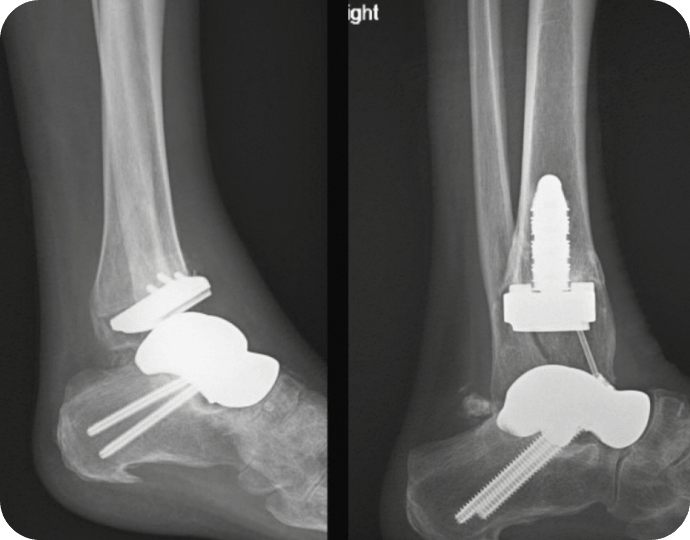
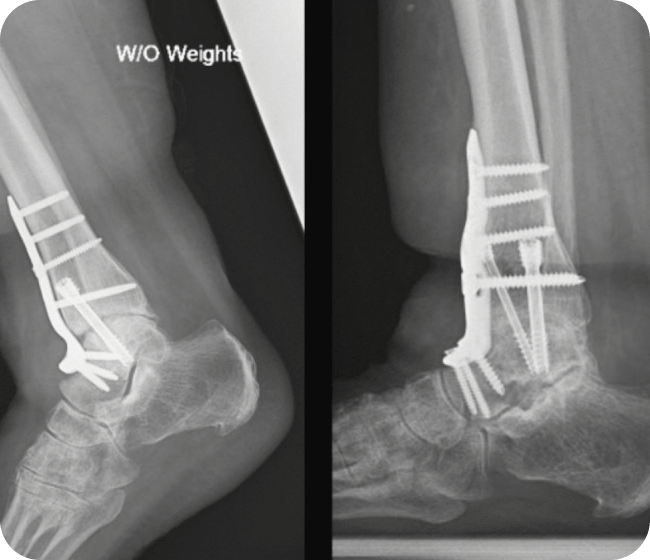
Complex Total Ankle Joint and Total Talus Revision
REVISION SURGERY • COMPLEX RECONSTRUCTION
Previous foot or ankle surgery doesn’t always provide the outcome patients hope for. If you’re still experiencing pain, instability, stiffness, swelling, or difficulty walking, it doesn’t necessarily mean you have to live with those symptoms. A thorough evaluation can often identify the underlying cause and help determine the best path forward.
Dr. Kyle McKray Smith specializes in complex revision foot and ankle surgery, helping patients understand why symptoms persist and whether revision surgery is the right solution. Not every patient requires another operation, but every patient deserves a comprehensive evaluation and an honest discussion of their treatment options.
Understanding Revision Foot & Ankle Surgery
Revision foot and ankle surgery is performed to address persistent pain, instability, deformity, or loss of function following a previous procedure. While most foot and ankle surgeries heal successfully, some patients continue to experience symptoms, develop new problems, or experience changes over time that warrant further evaluation.
Every revision case is unique. Rather than focusing solely on the previous operation, our goal is to understand the underlying cause of your symptoms. This often involves a comprehensive evaluation of bone healing, alignment, joint mechanics, tendons, ligaments, nerves, implants, and advanced imaging to identify the source of the problem and develop the most appropriate treatment plan.

When Should You Consider a Second Opinion?
If you’ve previously undergone foot or ankle surgery and continue to experience symptoms, a second opinion may help identify the underlying cause.
Common symptoms include:
- Persistent foot or ankle pain
- Swelling that does not improve
- Pain around hardware or implants
- Stiffness or reduced range of motion
- Instability or the feeling that the foot or ankle gives way
- Difficulty walking
- Progressive deformity
- Pain with daily activities or exercise
- New numbness, tingling, or nerve pain
- Difficulty returning to work, sports, or other activities
These symptoms do not always mean another operation is necessary, but they should be evaluated by a foot and ankle specialist.
When Should You Consider a Second Opinion?
If you’ve previously undergone foot or ankle surgery and continue to experience symptoms, a second opinion may help identify the underlying cause.
Common symptoms include:
- Persistent foot or ankle pain
- Swelling that does not improve
- Pain around hardware or implants
- Stiffness or reduced range of motion
- Instability or the feeling that the foot or ankle gives way
- Difficulty walking
- Progressive deformity
- Pain with daily activities or exercise
- New numbness, tingling, or nerve pain
- Difficulty returning to work, sports, or other activities
These symptoms do not always mean another operation is necessary, but they should be evaluated by a foot and ankle specialist.

Specialized Expertise in Complex Revision Surgery
Revision foot and ankle surgery is among the most technically demanding areas of orthopedic foot and ankle care.
Dr. Kyle McKray Smith specializes in complex reconstructive procedures, treating patients with failed prior surgeries, advanced deformities, post-traumatic conditions, arthritis, and other challenging foot and ankle disorders. His goal is to understand why symptoms persist, restore stability whenever possible, relieve pain, and help patients return to a more active lifestyle through individualized treatment plans.
Dr. McKray Smith Is Board Certified By:


Specialized Expertise in Complex Revision Surgery
Revision foot and ankle surgery is among the most technically demanding areas of orthopedic foot and ankle care.
Dr. Kyle McKray Smith specializes in complex reconstructive procedures, treating patients with failed prior surgeries, advanced deformities, post-traumatic conditions, arthritis, and other challenging foot and ankle disorders. His goal is to understand why symptoms persist, restore stability whenever possible, relieve pain, and help patients return to a more active lifestyle through individualized treatment plans.
Dr. McKray Smith Is Board Certified By:
When Is Revision Surgery Recommended?
Revision foot and ankle surgery may be recommended for patients experiencing:
- Persistent pain after foot or ankle surgery
- Failed total ankle replacement ⟶
- Failed ankle fusion
- Failed fracture fixation
- Implant loosening, wear, or failure
- Incomplete bone healing (nonunion)
- Progressive arthritis
- Malalignment or recurrent deformity
- Chronic instability
- Infection
- Continued difficulty walking or returning to normal activities

Our Approach to Revision Surgery
Every revision case begins with a thorough assessment. Revision surgery often requires looking beyond the original procedure to evaluate the entire foot and ankle as a connected system.
Dr. McKray Smith carefully reviews your medical history, previous procedures, imaging studies, and current symptoms while performing a comprehensive foot and ankle examination. Additional imaging may be recommended to evaluate bone healing, implant position, joint alignment, tendons, ligaments, cartilage, and surrounding soft tissues.
The goal is to determine why symptoms persist and develop an individualized treatment plan that addresses the underlying problem rather than simply treating the symptoms.
Our Approach to Revision Surgery
Every revision case begins with a thorough assessment. Revision surgery often requires looking beyond the original procedure to evaluate the entire foot and ankle as a connected system.
Dr. McKray Smith carefully reviews your medical history, previous procedures, imaging studies, and current symptoms while performing a comprehensive foot and ankle examination. Additional imaging may be recommended to evaluate bone healing, implant position, joint alignment, tendons, ligaments, cartilage, and surrounding soft tissues.
The goal is to determine why symptoms persist and develop an individualized treatment plan that addresses the underlying problem rather than simply treating the symptoms.
Revision Surgery Options
Treatment is tailored to the underlying cause of your symptoms and may include:
- Revision ankle fusion
- Revision total ankle replacement ⟶
- Hardware removal or revision
- Bone grafting and nonunion reconstruction
- Tendon and ligament reconstruction
- Deformity correction
- Joint-preserving reconstruction
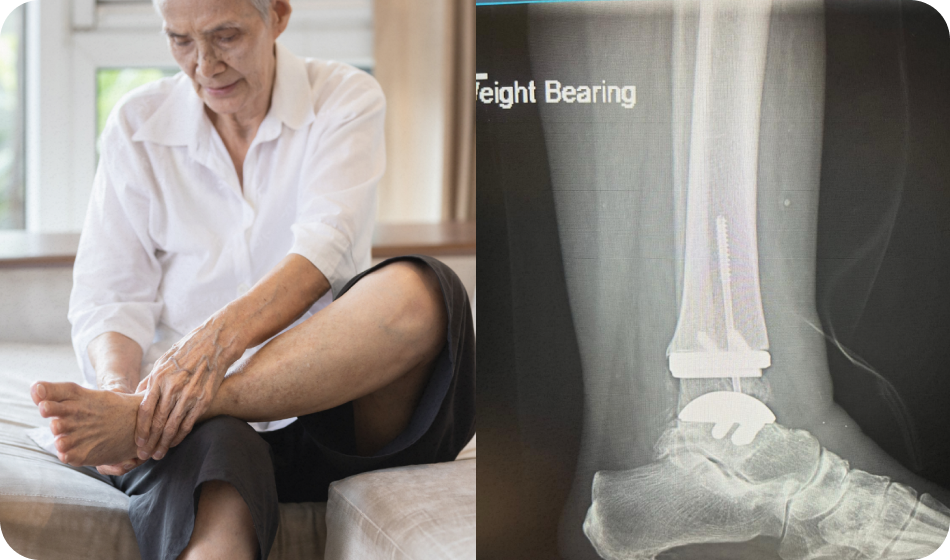
Every treatment plan is individualized following a comprehensive evaluation. While some patients benefit from revision surgery, others improve with non-surgical treatment. Our goal is to recommend the treatment that offers the best long-term outcome.
Revision Surgery Options
Treatment is tailored to the underlying cause of your symptoms and may include:
- Revision ankle fusion
- Revision total ankle replacement ⟶
- Hardware removal or revision
- Bone grafting and nonunion reconstruction
- Tendon and ligament reconstruction
- Deformity correction
- Joint-preserving reconstruction
Every treatment plan is individualized following a comprehensive evaluation. While some patients benefit from revision surgery, others improve with non-surgical treatment. Our goal is to recommend the treatment that offers the best long-term outcome.
Complex Revision Cases
Every revision surgery presents unique challenges. The following cases highlight the breadth of complex foot and ankle reconstruction performed by Dr. Kyle McKray Smith.
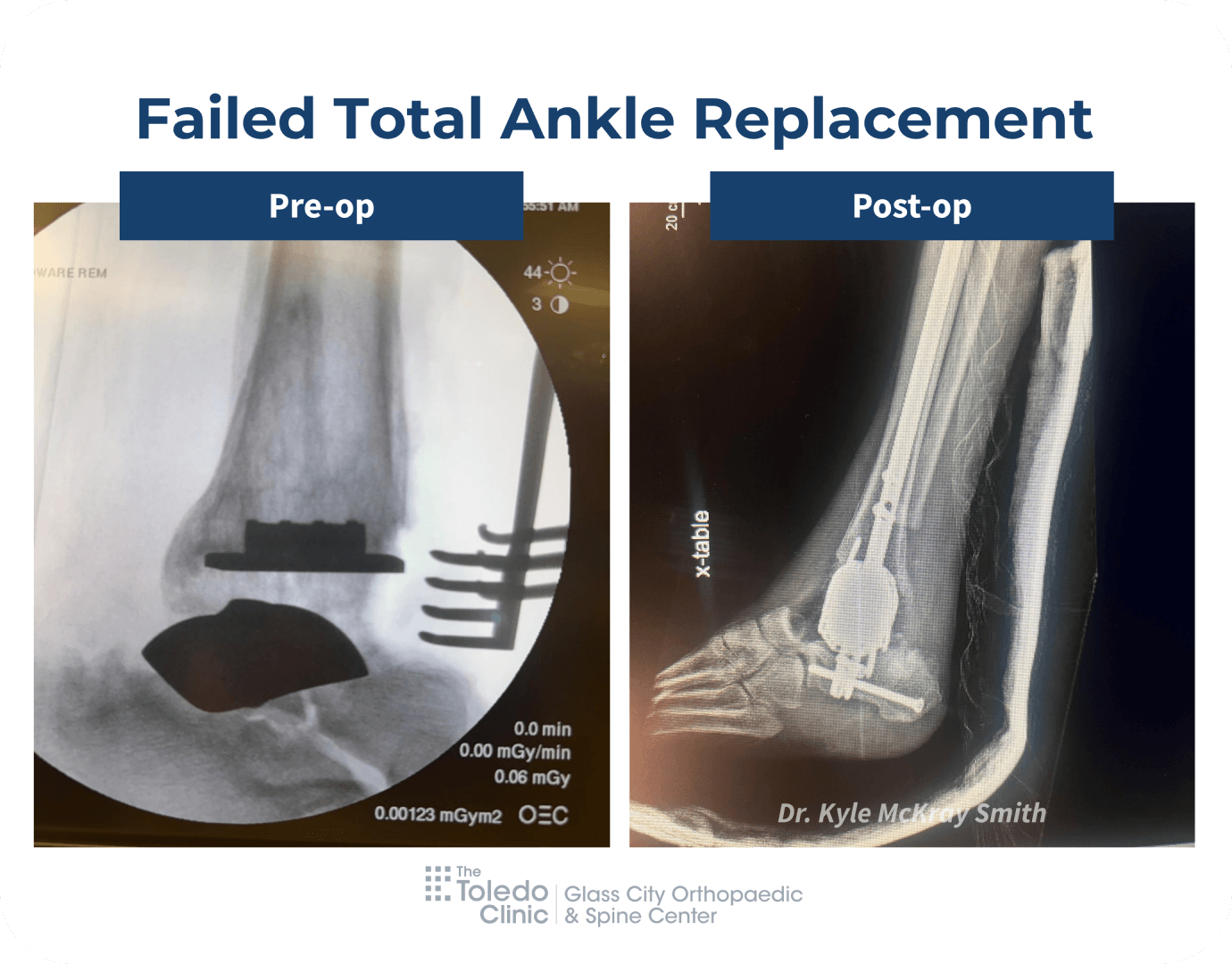
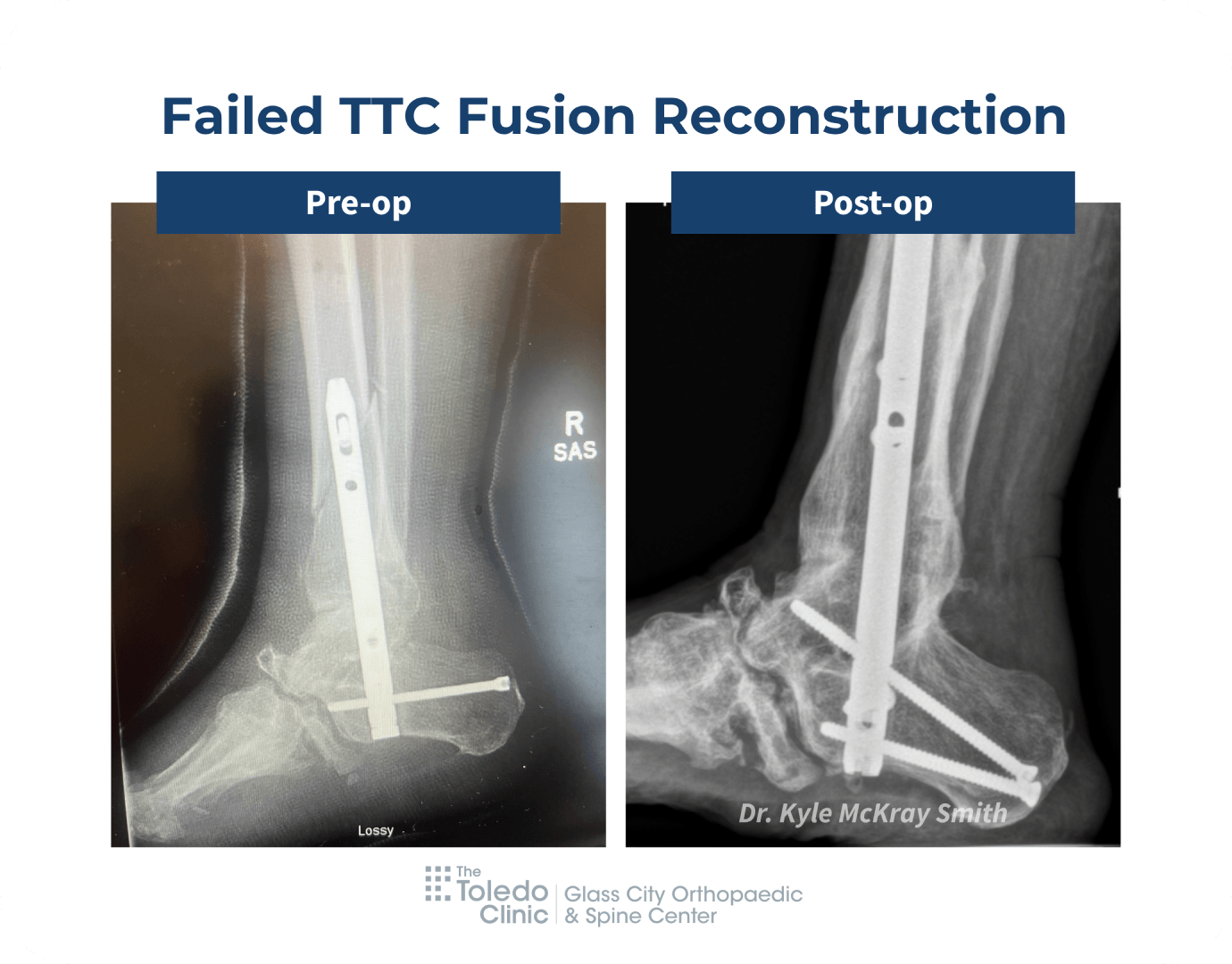
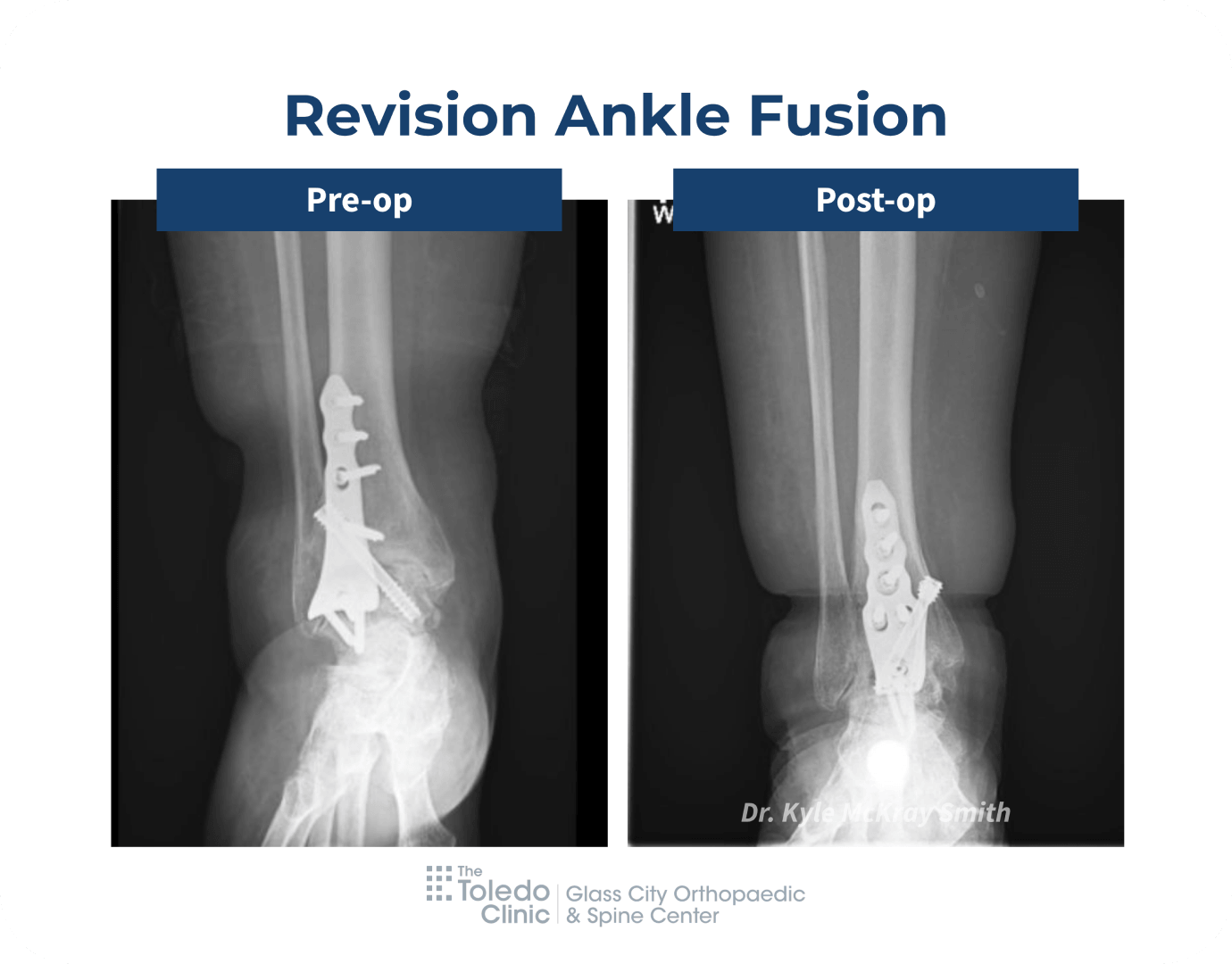
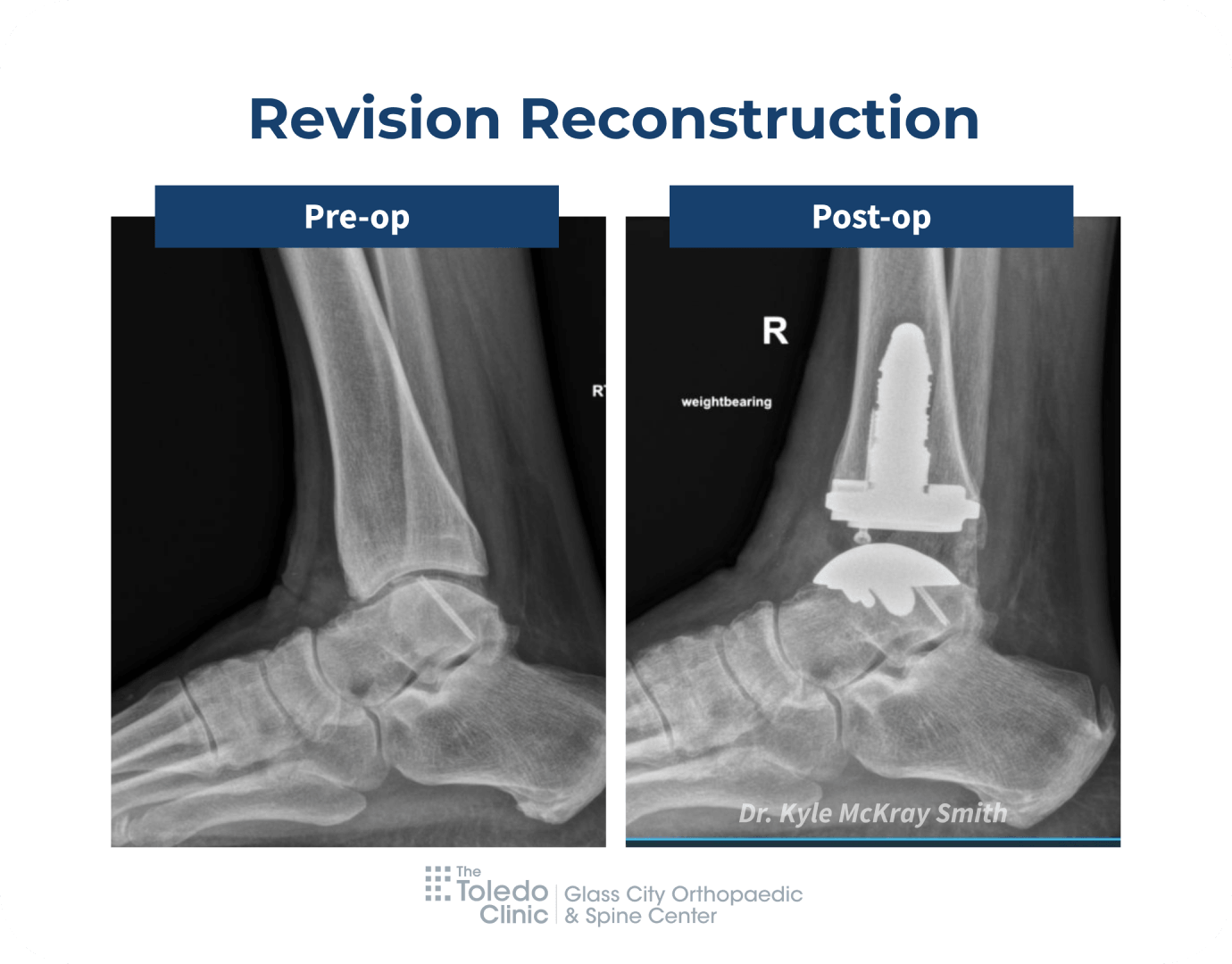
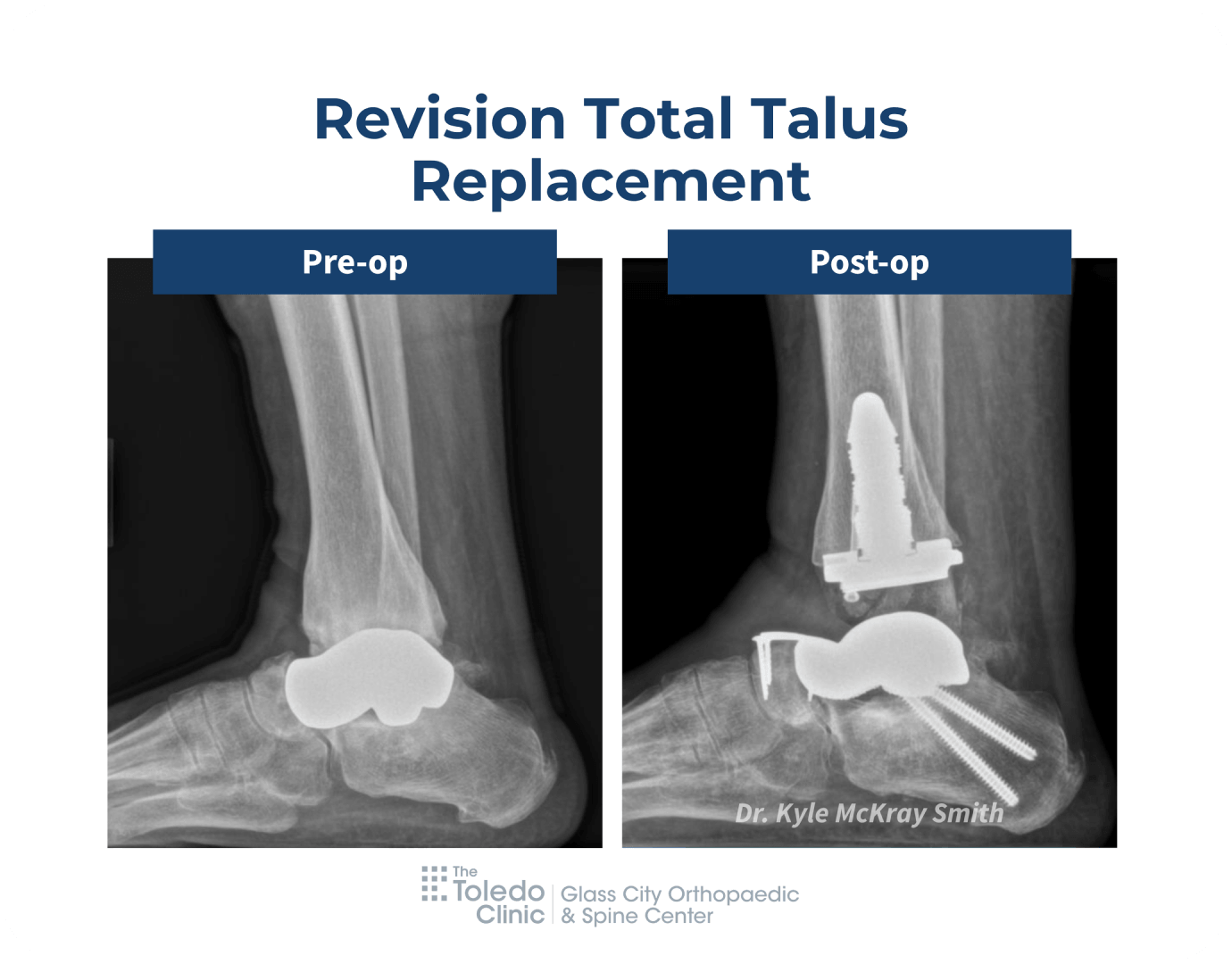
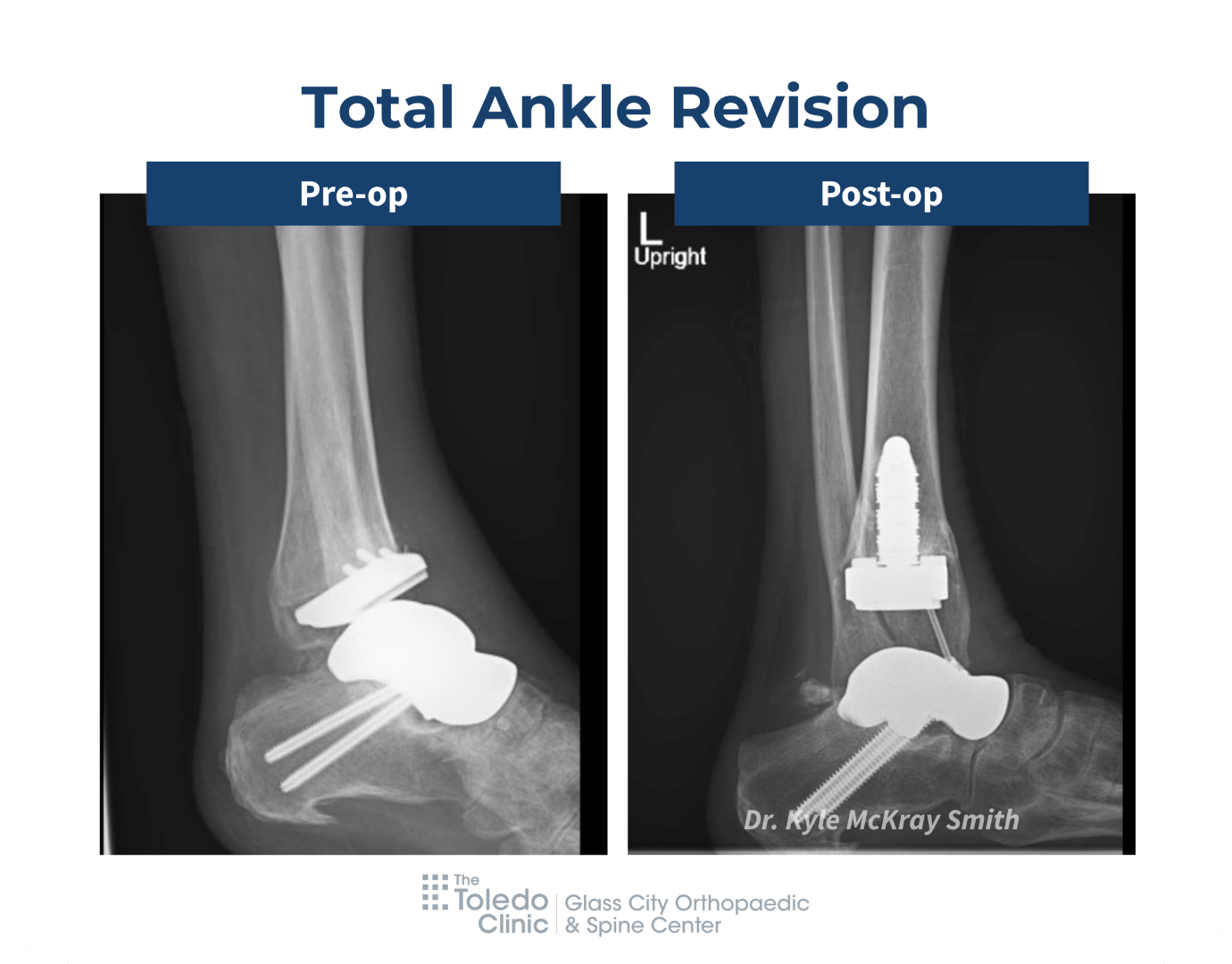
These examples demonstrate the individualized approach required to restore alignment, improve stability, relieve pain, and preserve function after previous surgery.
Take the Next Step
If you’re experiencing persistent pain or ongoing problems after foot or ankle surgery, a comprehensive evaluation can help identify the underlying cause and determine your treatment options.
Take the Next Step
If you’re experiencing persistent pain or ongoing problems after foot or ankle surgery, a comprehensive evaluation can help identify the underlying cause and determine your treatment options.
Recovery After Revision Surgery
Recovery varies depending on the procedure performed and the complexity of your condition.
Most patients progress through several phases that may include:
- Initial protection and healing
- Gradual weight bearing as appropriate
- Physical therapy
- Progressive return to daily activities
Recovery timelines differ for every patient. During your consultation, Dr. McKray Smith will discuss what you can expect based on your diagnosis, the procedure performed, and your personalized treatment plan.
Frequently Asked Questions
Every revision case is unique. These answers address common questions about revision foot and ankle surgery, treatment options, recovery, and when a second opinion may be appropriate.
How do I know if I need revision foot and ankle surgery?
Persistent pain, swelling, instability, limited function, or difficulty walking after foot and ankle surgery should be evaluated by a foot and ankle specialist. A comprehensive assessment helps identify the underlying cause of your symptoms and determine the most appropriate treatment.
Can a failed ankle replacement be revised?
In many cases, yes. Depending on the condition of the implant, surrounding bone, and soft tissues, patients may be candidates for revision total ankle replacement or another reconstructive procedure designed to restore stability, relieve pain, and improve function.
Does continued pain after surgery always mean I need another operation?
No. Continued pain can occur for many reasons and does not always require additional surgery. The first step is determining why the pain persists so the appropriate treatment can be recommended.
Is revision foot and ankle surgery more complex than the original procedure?
Often, yes. Revision surgery is typically more technically demanding because it may involve scar tissue, altered anatomy, bone loss, implant-related problems, or previous reconstruction. In general, revision procedures have less predictable outcomes than primary surgery, simply because they are performed in a more complex setting. Careful evaluation, surgical planning, and realistic expectations are essential.
Can every failed foot or ankle surgery be revised?
Not every previous procedure can be revised in the same way. The best treatment depends on the underlying problem, the condition of the bone and soft tissues, and your individual goals. After a thorough evaluation, Dr. McKray Smith will recommend the treatment option best suited to your specific situation.
Why do I still have pain after foot or ankle surgery?
Persistent pain after foot and ankle surgery can have many causes, including incomplete healing, implant-related problems, nonunion, arthritis, tendon or ligament injuries, malalignment, nerve conditions, or infection. A comprehensive evaluation helps identify the source of your symptoms and develop the most appropriate treatment plan.
DID YOU KNOW? Revision Surgery Guide
Learn why previous foot and ankle surgery may continue to cause pain and discover how advanced revision surgery can restore alignment, improve function, and relieve persistent symptoms.
Explore Related Conditions
Persistent pain after previous surgery may be related to progressive ankle arthritis. Learn about the symptoms, causes, diagnosis, and treatment options.
Post-Traumatic Ankle Arthritis
Old fractures and significant ankle injuries can lead to arthritis years later, even after the initial injury appears to have healed.
Explore Related Treatments
For patients with advanced ankle arthritis, total ankle replacement may relieve pain while preserving ankle motion.
Ankle Fusion
In certain cases, ankle fusion remains an effective option for relieving pain caused by severe arthritis.
Explore Related Conditions
Persistent pain after previous surgery may be related to progressive ankle arthritis. Learn about the symptoms, causes, diagnosis, and treatment options.
Post-Traumatic Ankle Arthritis
Old fractures and significant ankle injuries can lead to arthritis years later, even after the initial injury appears to have healed.
Explore Related Treatments
For patients with advanced ankle arthritis, total ankle replacement may relieve pain while preserving ankle motion.
Ankle Fusion
In certain cases, ankle fusion remains an effective option for relieving pain caused by severe arthritis.
DID YOU KNOW? Revision Surgery Guide
Learn why previous foot and ankle surgery may continue to cause pain and discover how advanced revision surgery can restore alignment, improve function, and relieve persistent symptoms.
Schedule Your Appointment
Serving Toledo, Perrysburg, Bowling Green, and Northwest Ohio.
Call the location most convenient for you to book your visit.
Glass City Orthopaedic & Spine Center
Toledo Location
4235 Secor Rd, Bldg 1, Upper Level
Toledo, OH 43623
Falcon Sports Medicine & Orthopedics
Bowling Green Location
Bowling Green, OH 43402